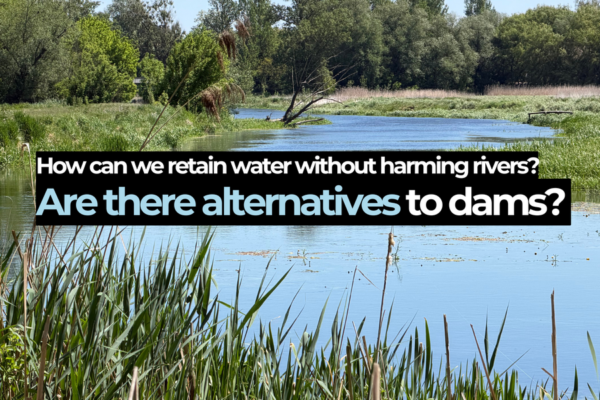
Over the past several months, experts from the Danube-Carpathian Programme have been surveying rivers across the Prypiat River basin in Ukraine’s Volyn and, to some extent, Rivne regions. Our team is identifying and mapping artificial barriers to determine which should eventually be removed to restore the free flow of Polissya’s rivers.


Both people and beavers block rivers. So what’s the difference?
July 8, 2026
When invasive plants shadowed the mountains
August 6, 2026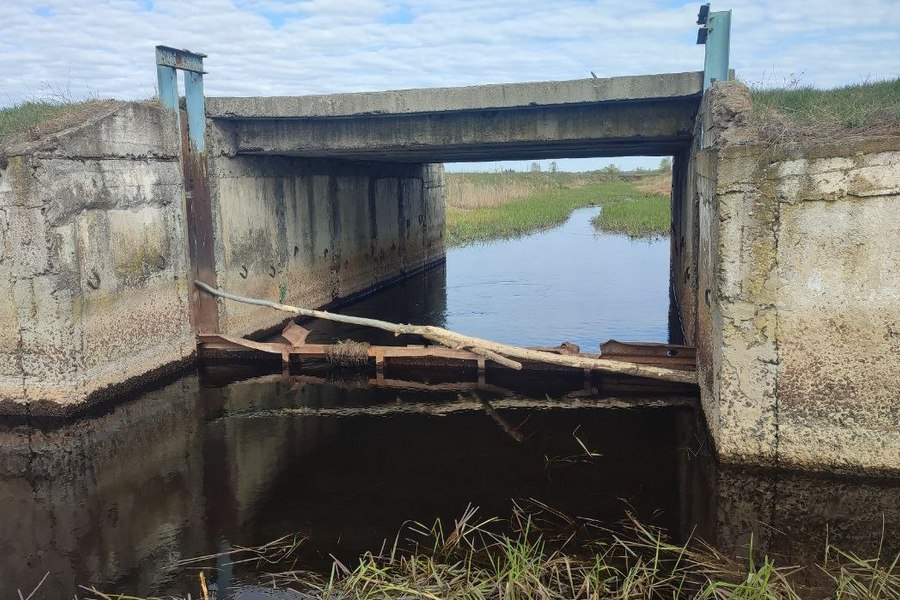
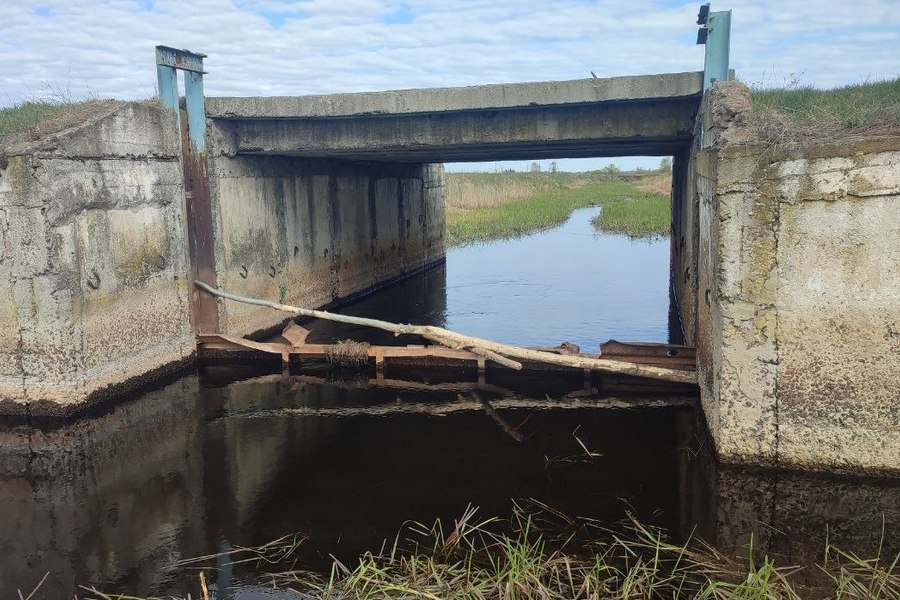
The scale of drainage infrastructure in Polissya is remarkable. According to regional water management authorities, there are more than 6,700 sluice gates in drainage systems in the Volyn region alone. Today, the vast majority no longer serve their original purpose. Public funding is generally sufficient only to keep the systems minimally operational, covering staff salaries and electricity costs for emergency pumping during floods.
The widespread deterioration and looting of land reclamation systems, particularly hydraulic structures (regulating sluices, crossings, culverts and weirs) in the Ukrainian Polissya, occurred in waves, beginning in the first half of the 1990s and continuing until the mid-2010s. This process had several distinct stages, driven by economic and social changes in the country.
During our field surveys, we found that between 50% and 75% of sluice gates, depending on the area, had been stripped of their metal components, either completely or partially.
From one perspective, this is good news. Once the metal gates and mechanisms were removed, many rivers became passable again for fish and other aquatic organisms. Where artificial barriers once interrupted river continuity, water can now flow freely.
However, the situation is not always straightforward.
In several locations, we found sluices that had been only partially dismantled. After the metal parts were stolen, the heavy structural elements collapsed into the river channel, where they now partially block the flow. As a result, water stagnates, warms, and eutrophication begins, leading to excessive algal growth. These structures should be fully removed to restore natural river processes.
There is another challenge as well.
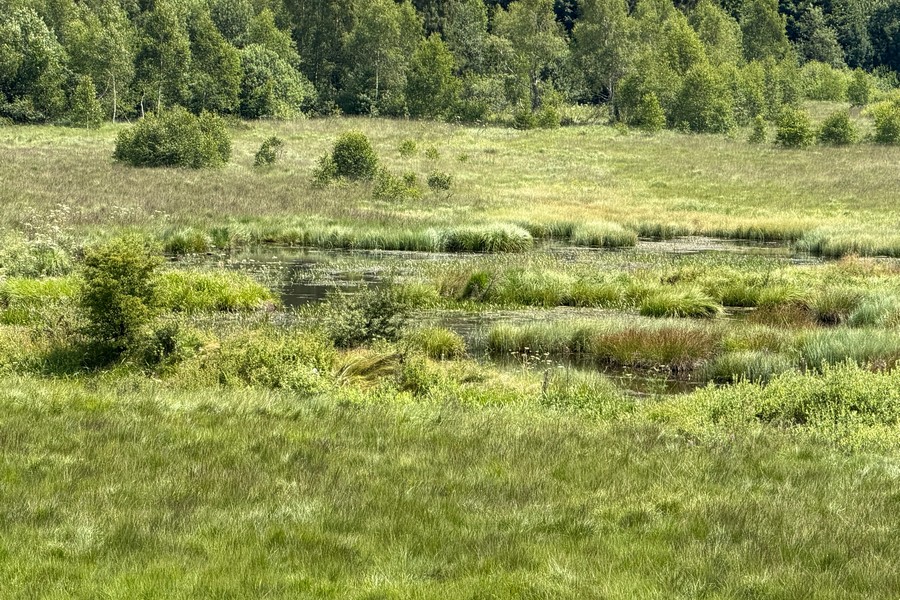
Many looted sluices are found not only on rivers but also on drainage canals. During dry years, these structures could have helped regulate water levels and retain water within the landscape. Without them, water drains away unchecked, causing drained wetlands and peatlands to dry out even more quickly.
At the same time, abandoned drainage canals that are gradually becoming overgrown with natural vegetation often begin to work in nature’s favour. Sediments and plants slow water flow, retain moisture, and partially offset the impacts of large-scale drainage projects carried out in the twentieth century.
This is why there is no universal solution.
Each site must be assessed individually. In some areas, obsolete barriers should be removed to restore the natural river flow. Elsewhere, restoring river meanders may be the most effective way to slow water loss. Around wetlands and peatlands, retaining water is essential to prevent drying and reduce the risk of peat fires. In such locations, beaver dams or nature-based structures made of wood and stone can effectively slow water flow without preventing fish migration.
“The drained landscapes of Polissya require a science-based strategy for future management in a changing climate—a highly complex task. Given the extent of drainage and the diversity of land use, restoration opportunities will vary from place to place. That is precisely why an individualised approach should underpin the restoration of rivers and wetlands. Our goal is not simply to remove old structures or retain water at any cost. We want to restore rivers so they can once again perform their natural functions—flow freely, support biodiversity, help local communities become more resilient to climate change, and serve as effective natural barriers during times of military aggression,” says Dr Bohdan Prots, Director of the Danube-Carpathian Programme.
Our work on the rivers of Polissya is supported by the Open Rivers Programme.
#Open_Rivers_Programme