Just a few decades ago, many river valleys and mountain slopes in the Ukrainian Carpathians were covered with species-rich grasslands, maintained by traditional livestock grazing.
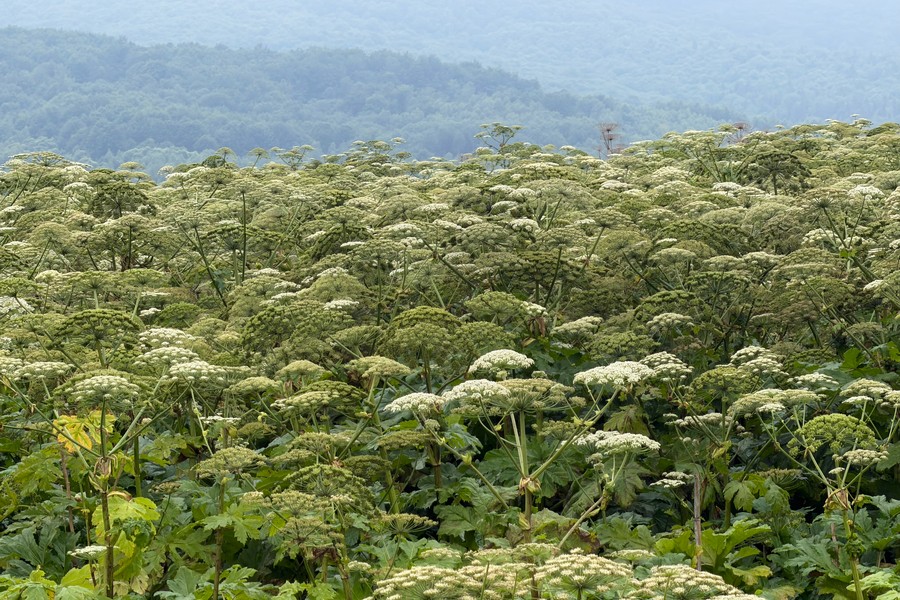
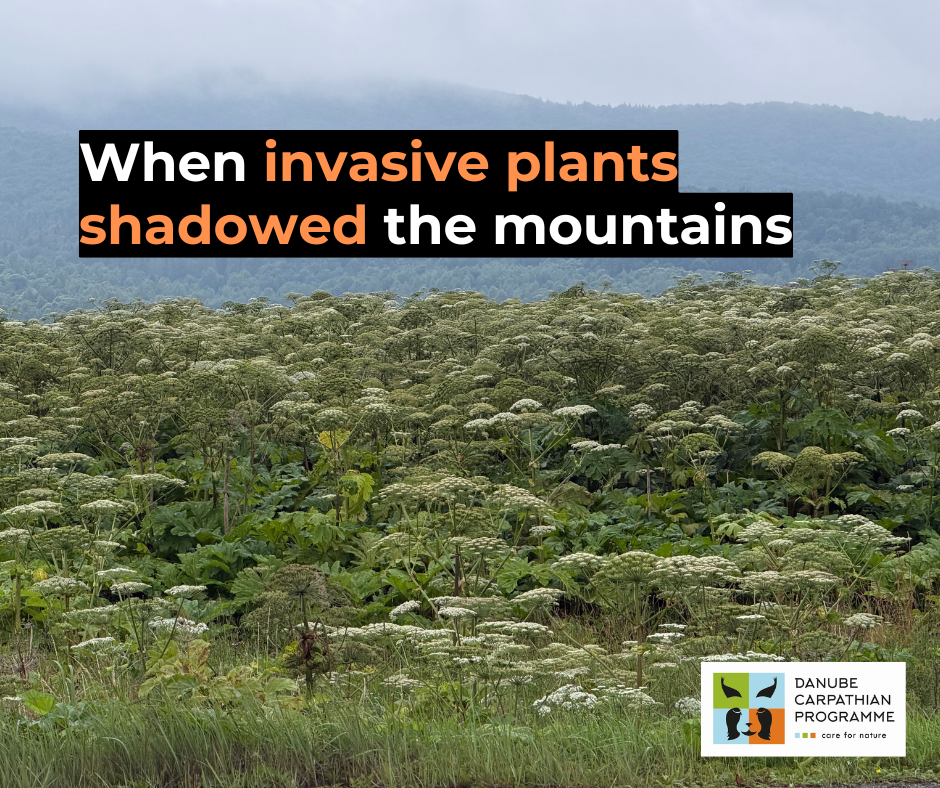
Today, many of these landscapes are increasingly being replaced by dense stands of Sosnowsky’s hogweed (Heracleum sosnowskyi), one of Europe’s most problematic invasive plant species.
The decline of traditional grazing has created ideal conditions for hogweed to spread.
This plant is well known for posing serious health risks to people, as contact with its sap can cause severe skin burns. However, its impact on nature is equally alarming.
Where hogweed becomes dominant, plant diversity declines rapidly. Native species are displaced, habitats are altered, and flower-rich meadows are replaced by near-monocultural stands.