At the same time, our experts hope that beavers will one day return to the Northern Peatlands and the Bilohorshcha Peatland Nature Reserve in Lviv, as well as to many other areas.
At first glance, this may seem contradictory. After all, both people and beavers build structures that block rivers. So what makes them so different?
Our expert, zoologist Andrii Bokotey, who is involved in research at the Northern Peatlands Landscape Reserve, explains.
A beaver dam is not a concrete barrier—it is part of a living ecosystem.
Concrete dams often completely block fish migration, trap sediments, and fragment rivers by separating one section from another.
Beaver dams, on the other hand, are low structures built from branches, wood, and mud. Water continuously flows through them, and during periods of high water—or through gaps within the dam—fish, amphibians, and other aquatic animals are able to move upstream and downstream. Beavers are a natural part of river ecosystems, and aquatic species have evolved alongside them over thousands of years.
Beavers build dams to survive—not for economic gain.
Beavers raise water levels to protect the entrance to their lodges from predators.
Unlike human-made structures that are often abandoned after construction, beavers constantly maintain their dams. They repair them, adjust openings as water levels change, and keep the system functioning. A beaver dam is not a static concrete structure but a dynamic, living system that changes together with the river.
Research also shows that, unlike many human-made dams, beaver dams often improve water quality.
Where beavers settle, biodiversity flourishes.
Human-built dams are usually designed to create a relatively deep reservoir.
Beaver dams, however, create shallow waters, floodplains, and wetlands. These habitats provide spawning grounds for fish, support aquatic vegetation, offer breeding sites for frogs and newts, and attract herons, storks, otters, and countless other species.
Scientific studies consistently show that rivers inhabited by beavers often support far greater diversity of birds, amphibians, insects, and aquatic invertebrates than similar rivers without beavers. Fast-flowing channels alone simply cannot provide the same variety of habitats.
Human-made dams are generally built to serve human needs, often at the expense of a river’s natural dynamics. Beaver dams, by contrast, are created by nature itself. They are an integral part of healthy river ecosystems, helping rivers remain resilient, diverse, and alive.
In a changing climate, that is more valuable than ever.
Our river research and restoration activities are carried out as part of projects supported by the Open Rivers Programme and Interreg Europe RIWET.
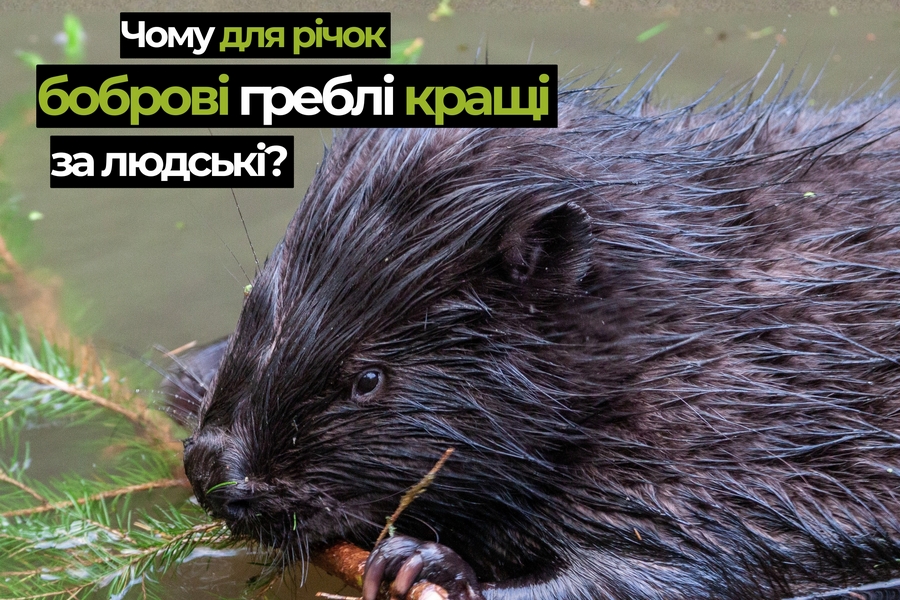
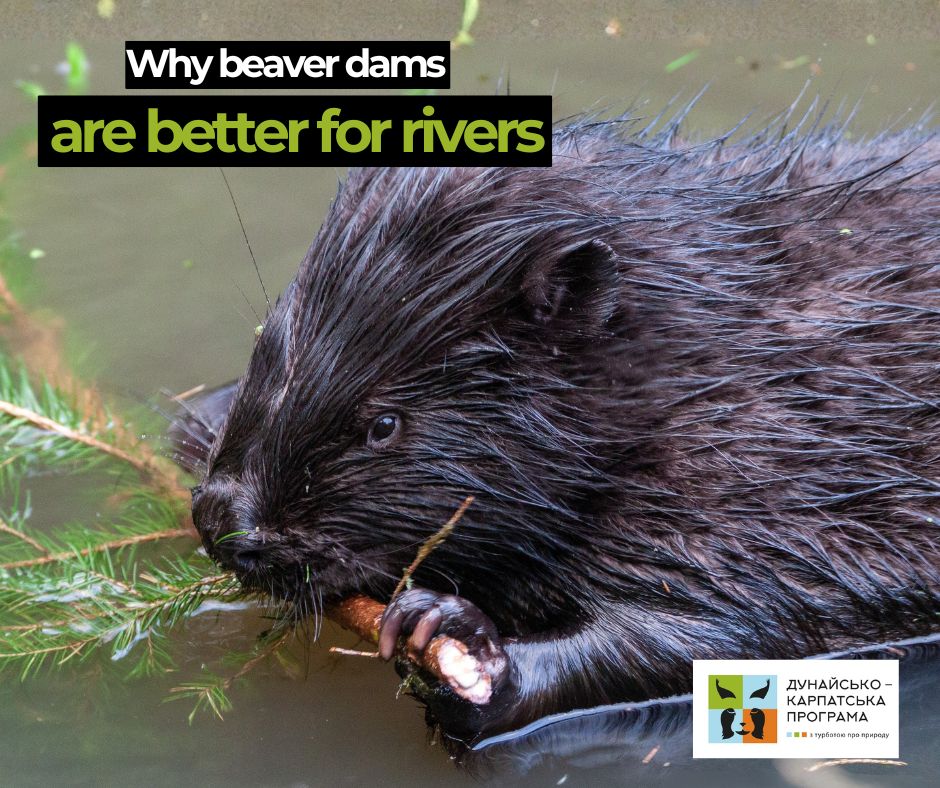
Photo: The beaver pictured here was photographed in the Marmarosh Research Department of the Carpathian Biosphere Reserve, on the Kvasnyi Stream. Just one year after we removed the remains of an old weir a few kilometres upstream, beavers built a new dam at this location—a powerful example of nature reclaiming the river.