Competition for housing in nature can be very fierce:
- the common starling may aggressively drive other birds out of an occupied cavity,
- the great tit sometimes throws out competitors’ eggs to take over their home,
- the Eurasian nuthatch “plasters” the entrance of a cavity with mud, leaving only a narrow opening for itself,
- birds may even throw out or kill the chicks of previous occupants.
The problem is not that “nature failed to think this through.” For thousands of years, birds managed perfectly well on their own. The problem is that humans have destroyed — and continue to destroy — too many trees where natural cavities form or where woodpeckers create them.
In forests, mature trees are cut down because forestry often treats forests like crop fields, harvesting trees before they can grow old. In parks and gardens, such trees are removed for safety, aesthetics, or because they no longer produce fruit. Yet old trees are exactly what cavity-nesting birds depend on.
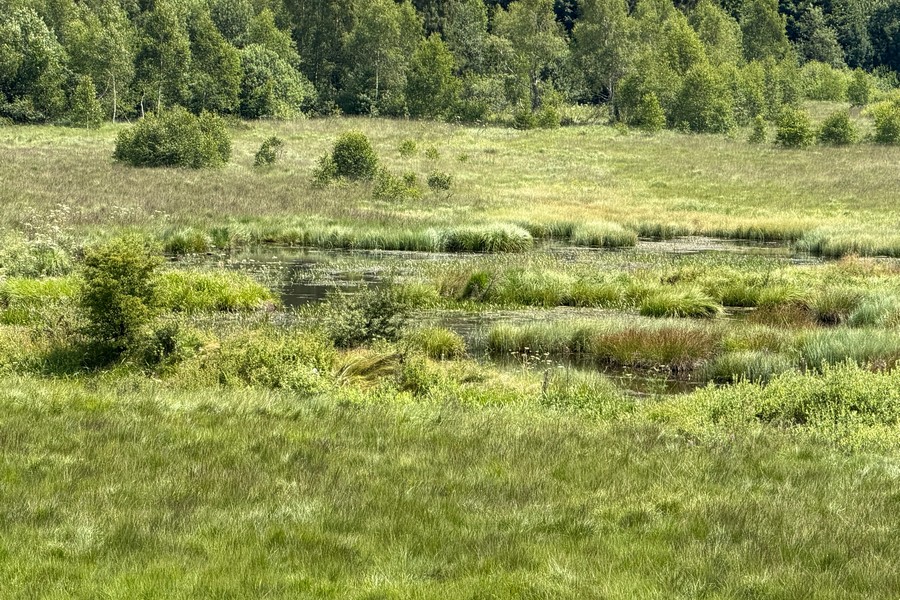
Our ornithologist Andrij Kijko, who studies birds in the Bilohorshcha Peatland Landscape Reserve as part of the project “Restoration of the Bilohorshcha Peatland Landscape Reserve for the benefit of the local community, wildlife and climate change adaptation”, supported by Restore4Life, noticed something interesting: Cavity-nesting birds regularly come to the reserve. There is food for them here. But they have nowhere to settle — the trees growing in the area are still too young to provide nesting sites.
The situation is further complicated because the reserve lies within the boundaries of the city of Lviv and the Zymna Voda territorial community. The area is almost completely surrounded by buildings, which makes it harder for birds to move and establish new nesting sites. In this case, they critically need human help.
That is why, within the project, before the start of the breeding season we built 31 nest structures for different species. Some have already been installed in the reserve’s tree stands, and the rest will be placed during the coming week.
Among them are:
- insect hotels
- small nest boxes for passerine birds
- specialized nest boxes for the common kestrel, long-eared owl and hoopoe
- bat boxes (yes, we know they are not birds — but they also need cavities)
- and even real “apartments” for the barn owl, a species listed in the Red Book of Ukraine.
In the near future, as part of the Restore4Life project, implemented together with the Lviv Department of Ecology, the Bilohorshcha Peatland Landscape Reserve will also gain 3 nature trails and 2 birdwatching towers.
Soon you will be able to see for yourself how cavity-nesting birds are doing in the reserve. Just remember: nesting birds should not be disturbed while they are incubating eggs or raising chicks in cavities, nest boxes, or nests.