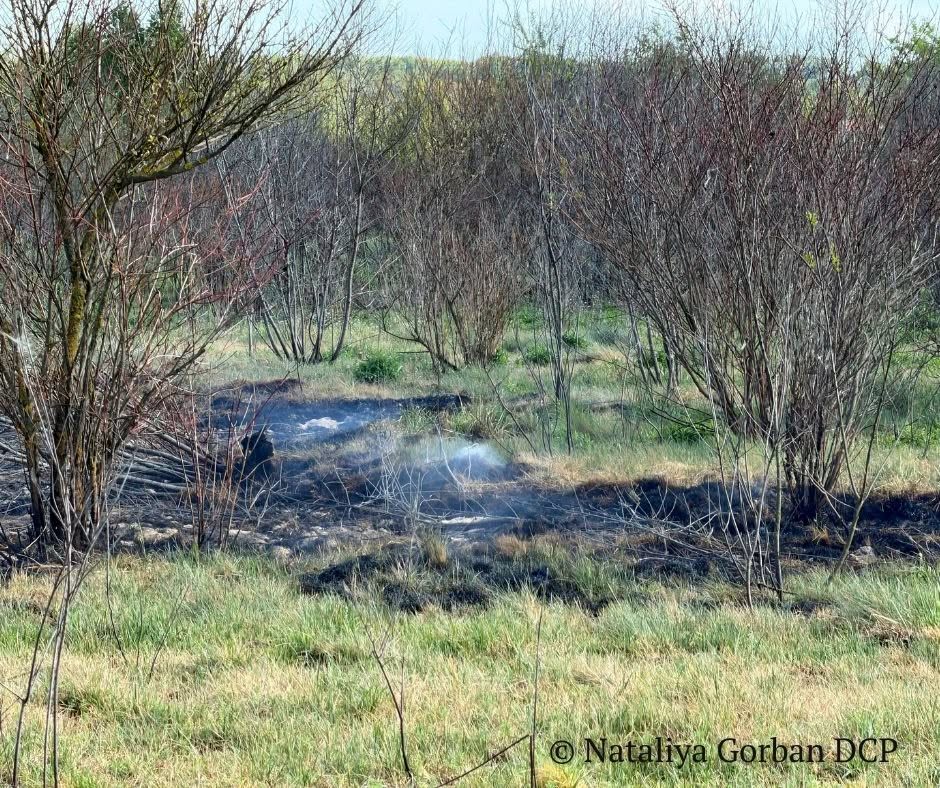
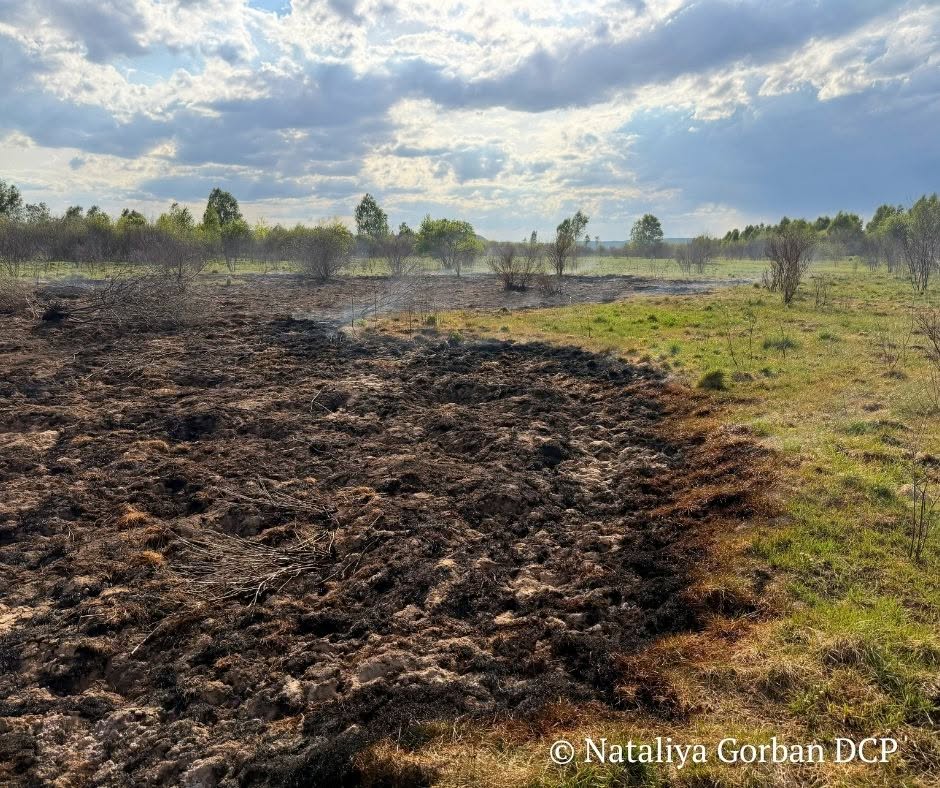
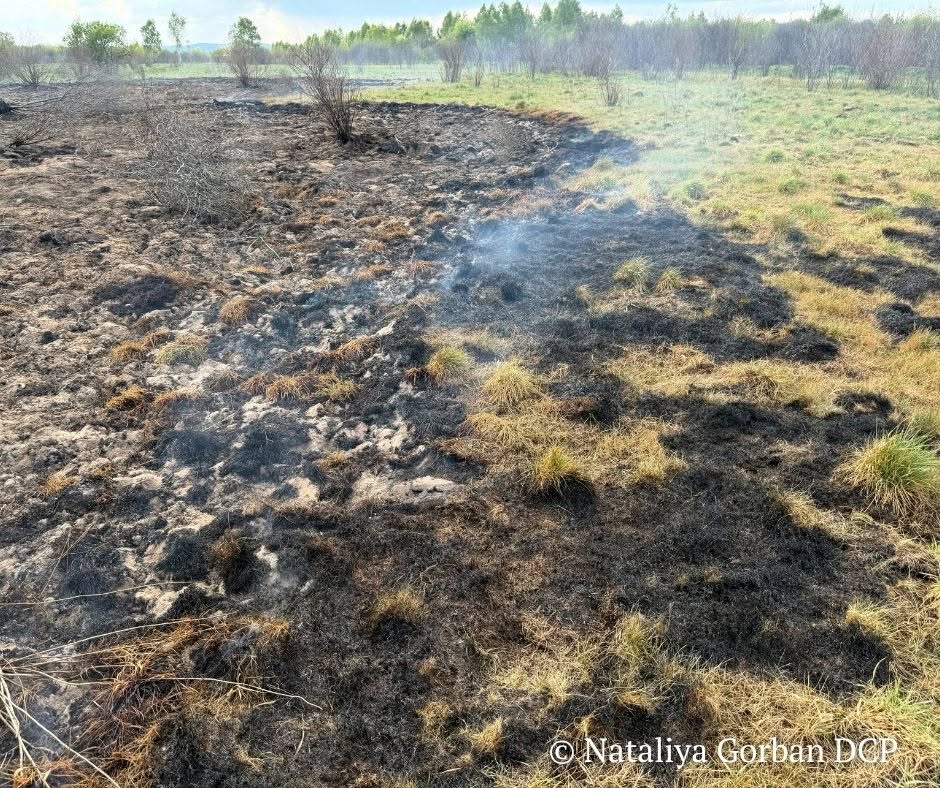
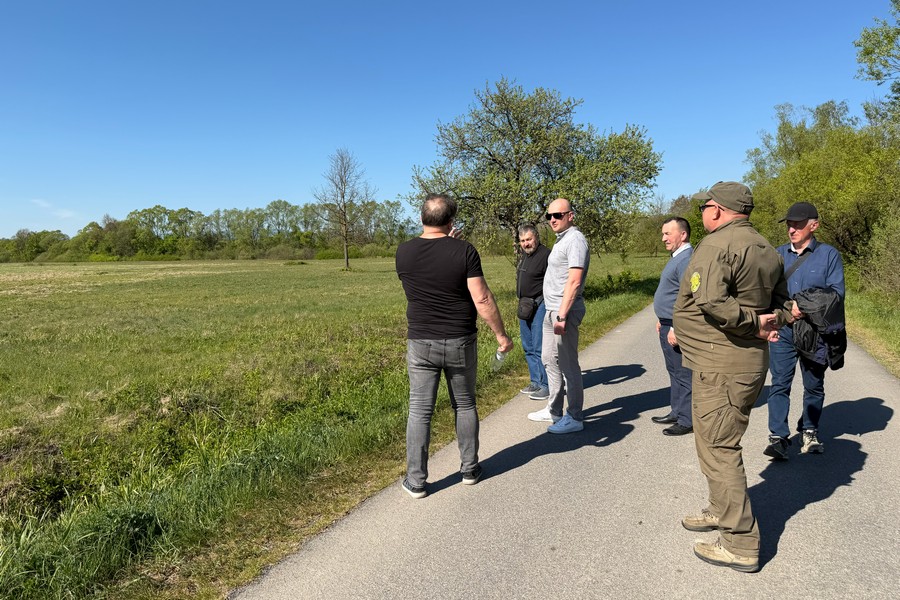
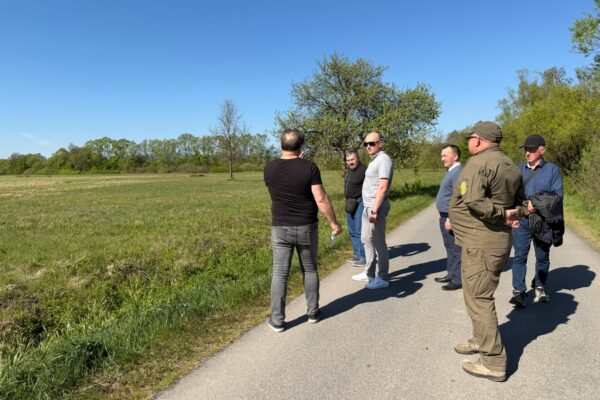
Today, our Communications Manager, Nataliya Gorban, who was working in the peatland area filming beaver dams and rare bird species, discovered a smouldering peat fire and called the emergency services.


Peatlands Resolution No. 579: What Will It Change?
June 19, 2026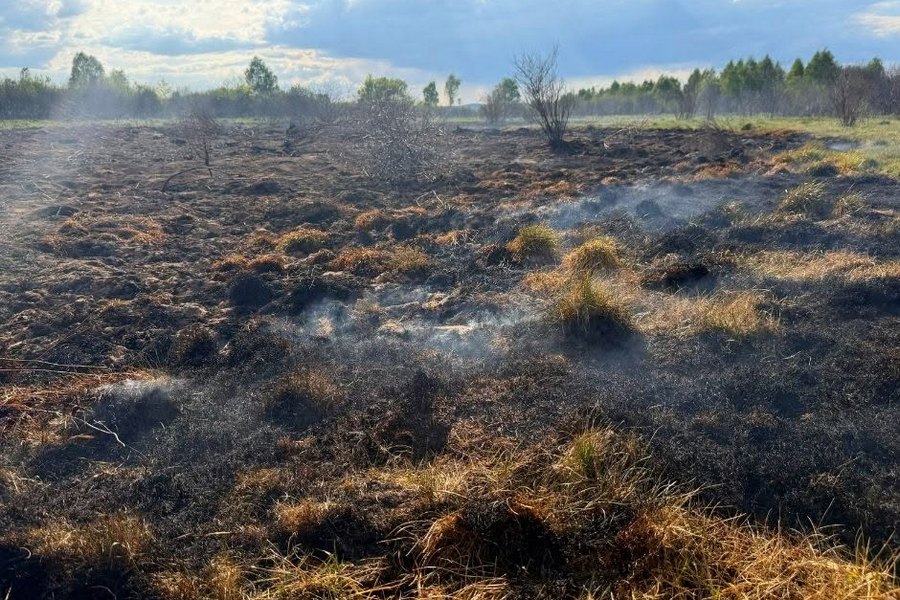
According to the firefighters, this was already the second peatland fire hotspot reported today.
The fire had likely been smouldering since early spring — deep underground in the dried peat. This is a common characteristic of drained peatlands: they can burn beneath the surface for weeks or even months.
As climate change progresses, such fires are expected to become increasingly frequent. Drained peatlands are not only a problem for wildlife. They pose risks to people, public health, air quality, community safety, and local climate resilience.
That is why restoring water to peatlands is critically important.
The Danube-Carpathian Programme NGO, together with the Local Association of Local Governments “Lviv Agglomeration”, is implementing the SpongeWorks project: restoring urban peatlands to support climate adaptation, biodiversity recovery, and benefits for local communities — for the sake of climate, nature, and people.
One of the project’s key objectives is to partially reverse the impacts of past drainage schemes and bring water back to the area. This is essential not only for biodiversity restoration but also for reducing the risks of peat fires, overheating landscapes, and further ecosystem degradation.
Today, it is important that the significance of this work is understood not only by scientists or firefighters who directly deal with the consequences of peatland drainage, but also by local communities.
Because peatland restoration is no longer simply a matter of nature conservation. It is a matter of public safety and adaptation to a new climate reality.