Video: One Day in the Valley of Narcissus
May 16, 2025
How to prepare delicious elderflowers
June 1, 2025

For two years, our experts and scientists Maryna Ragulina and Oleg Orlov have been surveying the most valuable water bodies in the Lviv region. Their goal: to identify the best-preserved and most important water bodies for wildlife and human well-being (lakes, swamps, springs, wetlands, peatlands, etc.), which should be given nature protection status, as these territories are extremely important for the preservation and efficient use of water resources.


As a result of scientific research, our experts have already identified and thoroughly examined over 100 promising sites for conservation. For the first four of them, a package of necessary documents has already been submitted to the Department of Ecology and Natural Resources of the Lviv Regional State Administration for their conservation.
It is about creating:
- “Lake Lebedyne” within the boundaries of the Shchyretsk community of the Lviv district of the Lviv region with a total area of 1 ha.
- “Lake Bezodnya” within the boundaries of the Velykylyubinsk community of the Lviv district of the Lviv region with a total area of 2 ha.
- “Popelyanske karst field” within the boundaries of the Shchyretsk community of the Lviv district of the Lviv region with a total area of 10 ha.
- “Sknylivske karst field” within the boundaries of the Zymnovodivsk community of the Lviv district of the Lviv region with a total area of 10 ha.
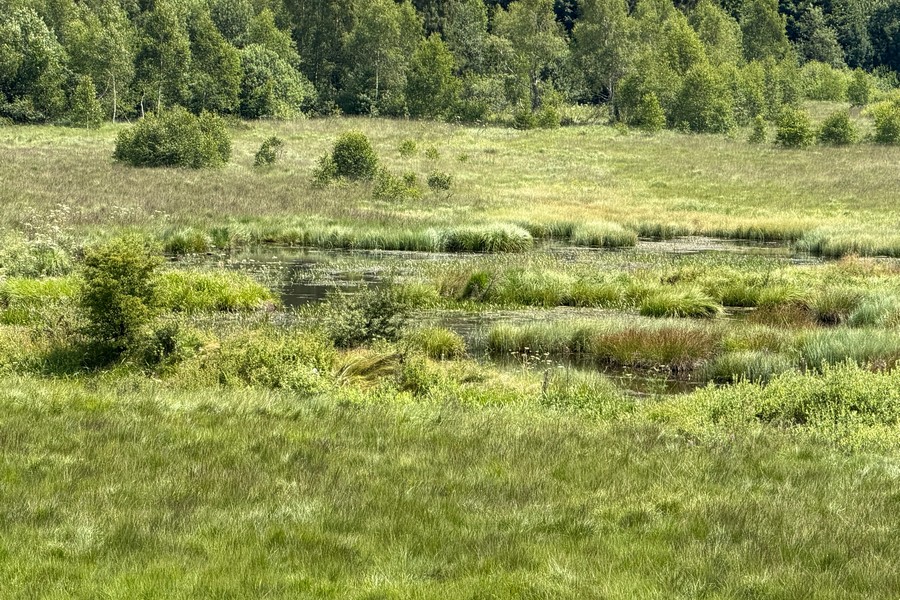
“All 4 objects are karst depressions. In terms of their ecology, the karst saucers of the Lviv region are close to the Irish “dry lakes” – turlogs (from “tur” – “dry” and “lough” – “lake”), the drying lakes in the Pivka Valley in Slovenia and the “mystical lakes” in Eastern Canada. The difference between the studied water bodies is that in our country it is sulfate (gypsum) karst, while in Ireland, Slovenia and Canada it is carbonate (limestone). However, the value of the “dry lakes” is due not so much to geological as to hydrological features – these are seasonally flooded depressions in karst areas, with vegetation and soils typical of wetlands. Due to significant fluctuations in water level during the year, not all of them are true lakes, but rather transitional between aquatic and terrestrial ecosystems, which is “determines their uniqueness. European “dry lakes” are priority habitats for protection under the EU Habitats Directive,” says ecologist Marina Ragulina.
“The significance of “dry lakes” for the local biota is that they have never been fully managed due to the specifics of the water regime and play the role of a kind of “refugium” – natural centers among agricultural landscapes (arable land, pastures and hayfields),” says Oleg Orlov.
“Dry lakes” are important as:
- habitats of aquatic invertebrates, in particular small crustaceans, due to the absence of predators (fish);
- spring spawning grounds for amphibians;
- nesting and feeding places for birds, as well as recreational reservoirs during migration;
- shelter for animals (rodents, predators, ratites);
- centers of rare species and groups of wetland and meadow vegetation;
- unique landscape units.
Work on the preservation of valuable water bodies is being carried out within the framework of the project “Creation of nature conservation areas in the Lviv region and adjacent territories for the preservation of wetlands” with the support of a Belgian public organization Natuurpunt Beheer.
In total, within the framework of the project, scientists have already surveyed over 100 water bodies and identified about 30 territories that are promising for conservation, 15 of which we plan to process and submit for consideration to the Department of Ecology and Natural Resources of the Lviv Regional State Administration in the near future.
If you know about karst lakes in the Lviv region that are valuable for preserving biodiversity, we encourage you to share this information with us. Your messages will help protect and preserve the wildlife of the Lviv region. You can contact us at: dcp@natureexperts.org.