Cars parked in the shade of invasive trees accumulate seeds that fall from the trees. In a week, a car parked under an American ash tree in the central part of Lviv can accumulate over a thousand seeds. On a truck, this number can reach several thousand.
Most seeds of invasive tree species are adapted to be spread by water, wind, and animals. Therefore, the city is a dangerous source of seeds of invasive tree species. Once outside the city limits, these seeds germinate successfully, and later, at a young age (about 5 years), they are already able to produce their own seeds, which helps the species to capture ever larger territories, displacing local natural species.
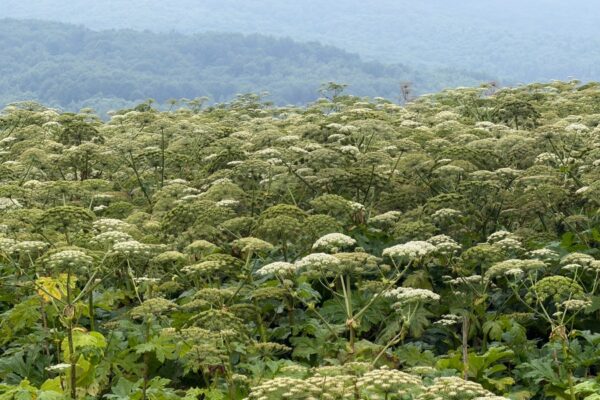
Along many rivers, even mountain ones, especially in recreation areas, fragments of invasive tree stands are intensively developing, displacing willow groves and other natural groups. Moreover, some species have the ability to change the chemical composition of the soil around them in such a way that the land becomes unsuitable for other plants.
Among the most common invasive species that affect natural communities are American maple, Pennsylvania ash and American ash, red oak, robinia pseudoacacia (white acacia), and narrow-leaved olive.
Most of these trees were brought to us from North America, species on other continents sometimes develop better than on their continent of origin.
NGO “Danube-Carpathian Program” http://www.natureexperts.org/ is engaged in the restoration of natural stands and habitat types from the impact of invasive species, because the penetration of invasive species into natural habitat types leads to disruption of ecosystem relationships, a decrease in species diversity and the number of species of natural flora, local displacement, and, ultimately, the disappearance of populations of certain rare species.
When landscaping, let’s do it responsibly!