Old prints and scientific literature of the State Natural History Museum are now online
March 12, 2024Appeal to deputies about the inadmissibility of the adoption of the anti-forest draft law 9516
March 27, 2024
What do you know about floodplain forests – unique places where the forest and the river meet?
Why are there so many giant trees here?
Why don’t people go for walks here?
But how do we lose the singing willows that bend over the water?
March 21 – Forest Day, 22 – Water Day This is a great opportunity to learn more about floodplain forests.
What a typical floodplain forest looks like
- Impressive trees are located close to each other – up to 2 meters in diameter and 40-45 meters high. And all thanks to the river, which brings plenty of nutrients and moisture to the floodplain forests. This allows trees to grow to impressive sizes without competing with each other.
- Not only trees benefit from the abundance of nutrients and moisture. Passing through floodplain forest is often almost impossible. For example, a typical feature of a floodplain forest is nettles up to 3 meters high and fallen trees that are partially covered with silt. Not the best place for a walk, agree. Sometimes such places are called “green hell”.
- Another feature of the floodplain forest is its azonal nature. This means that floodplain forests from Transcarpathia to the Danube Delta (a distance of 2,000 km) will look practically the same. The reason for this is similar conditions, as well as the river being an effective migration corridor for the spread of species.
What is their value?
In the CORINE Biotopes manual, floodplain forests are defined as: “the most diverse, structurally, florally and faunally, of all European ecosystems.”
Floodplain forests provide:
- replenishment of groundwater;
- filter sediment and pollutants;
- transport nutrients;
- reduce inundation and limit flood-related damage (stopping “flash” floods) through floodwater conveyance and storage functions;
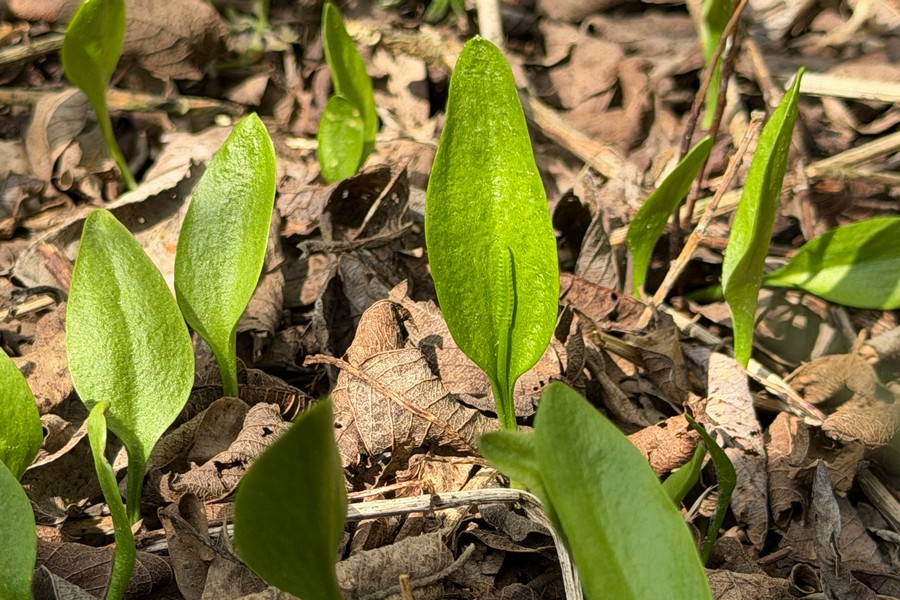
- support the habitat of some of our most sensitive species, such as: forest cat (Felis silvestris), otter (Lutra lutra), European broad-eared (Barbastella barbastellus), long-eared nightingale (Myotis bechsteinii), turun Carabus clathratus L, machaon (Papilio machaon) , black stork (Ciconia nigra), Kyiv nettle (Urtica kioviensis), hellebore (Epipactis helleborine).
- mitigation of extreme climatic events;
- produce a high amount of resource cellulose and retain carbon from the air.
The main threats to floodplain forests are:
- cuttings As a result of climate change, floodplain forests have become much drier, and waterlogging no longer prevents foresters from logging here. Heavy equipment can safely drive in places where a boat would have had to be used before.
- invasive species. The river bed quickly and efficiently spreads the seeds of invasive species. That is why the banks of the river are often overgrown with robinia, Pennsylvania ash, pine borsch and other species. And the willows above the water, which were described in our classics and sung in folk songs, are becoming less and less – their place is taken by the American maple.
How to act?
Over the past 2 decades, we have lost up to 65-80 percent of floodplain forests in western Ukraine.
How to stop it?
- The first is by granting nature protection status. Yes, not all of them are in their natural state, and a significant part of such forests is “contaminated” by invasive species. But because of the high value and natural benefits we get from floodplain forests (water conservation and purification, flood protection, etc.), we must bequeath them to preserve them.
- The restoration of floodplain forests is many times more difficult and more expensive than the pine forests of Volyn or the beech forests of the Carpathians. But it is critically important to do this.
- It is important not to change the purpose of floodplain forests, because it is forbidden to build houses in floodplains, and agriculture (except for special grazing) is low-efficiency.
- Carry out forestry that is close to nature, which is more efficient and better adapted to climate change. Continuous logging in floodplain forests causes erosion, which affects the quality and quantity of water resources and increases flood activity.
In the photo: typical spicies of floodplain forests of Ukraine