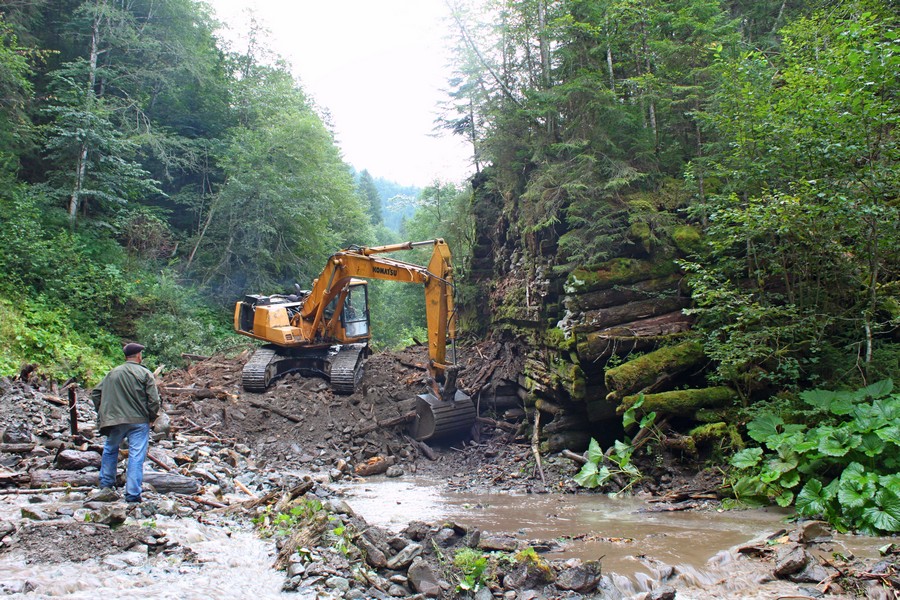
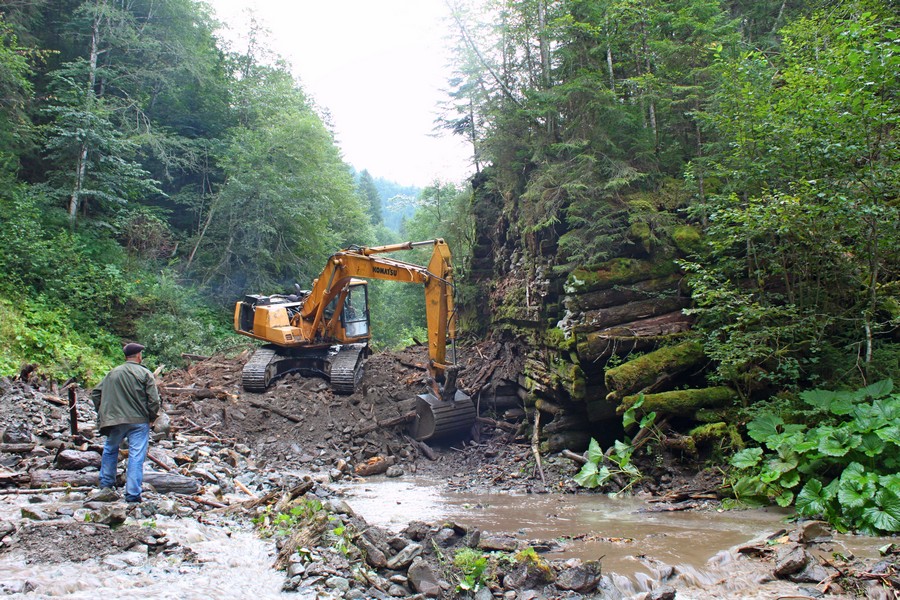
Ukraine should also be part of this river restoration movement. Together with the Carpathian Biosphere Reserve, we have already removed three artificial barriers in the Carpathians on tributaries of the Tisza River. This work helped restore fish migration, protect infrastructure, and improve public safety by making roads near the former dams passable and safe throughout the year. In recognition of this achievement, the Danube-Carpathian Programme received the European Dam Removal Award in 2025.
Today, we are continuing this work in Polissia.
The Danube-Carpathian Programme is implementing the project “Identification and Mapping of Priority Barriers for Removal in the Pripyat River Basin in Ukraine”, supported by the Open Rivers Programme, with the aim of enabling future barrier removal.
During 2025–2026, we are focusing primarily on the sub-basins of the Uzh, Stokhid, and Upper Pripyat rivers — from their headwaters to the wetland valleys of Polissia — while also paying attention to other sub-basins.
The goal of the project is not simply to locate old dams or abandoned hydraulic structures.
We are laying the groundwork for large-scale river restoration in Ukraine by:
▪️ mapping barriers
▪️ assessing their impacts on rivers and wetlands
▪️ identifying priorities for removal
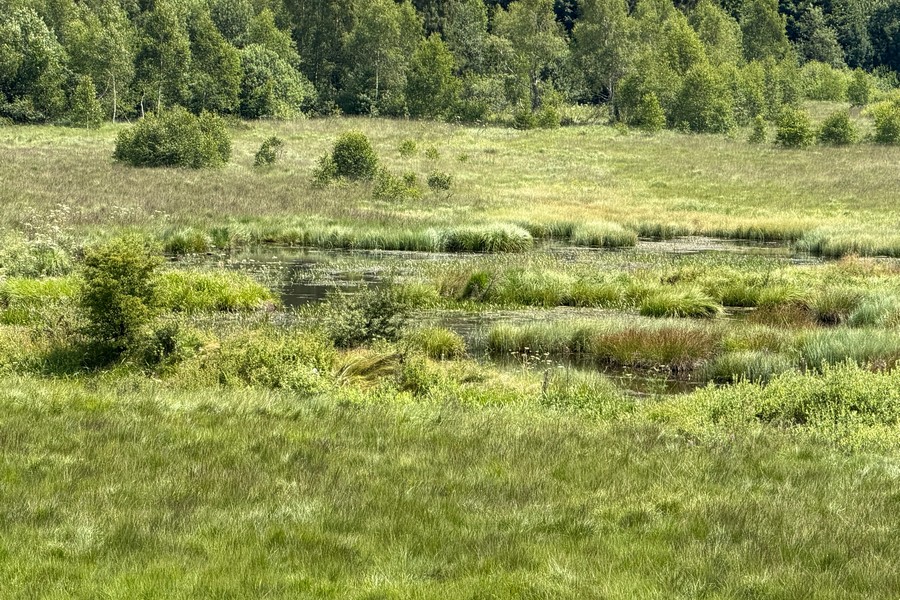
▪️ investigating where restoration will provide the greatest benefits for nature and people
▪️ working closely with local communities and public authorities.
“Over the last six years alone (2020–2025), at least 2,297 barriers have been officially removed in Europe under the Open Rivers Programme. However, the total number of artificial barriers removed across Europe over the past three decades already exceeds 7,000–8,000 structures. In Ukraine, around a dozen barriers have been removed so far. Barrier removal is one of the fastest ways to revitalize rivers, improving their ecological condition and hydrological regime — including water quality and the restoration of sediment transport — while also enhancing biodiversity through the recovery of fish migration and the reduction of habitat fragmentation,” says Bohdan Prots, PhD in Biology, Director of the Danube-Carpathian Programme.