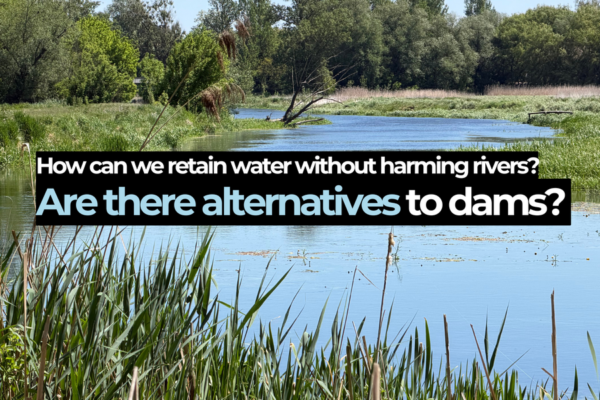
Flood control measures that were used a century ago, and which included measures such as straightening the riverbed, deepening it, and clearing the banks, are not able to protect against flooding, but on the contrary, are harmful – both for the ecosystem and for people,” says the scientist of the NGO “Danube-Carpathian Program” ecologist, Ph.D. Marina Ragulina.
One of the numerous proofs of the ineffectiveness of flood control measures is the Zubra River. The upper part of the Zubra was cleared and improved several years ago.
This year, flood control measures were also carried out on the Zubra in the lower part of the river, in particular, in the section between the villages of Kugayev and Pidtemnye.
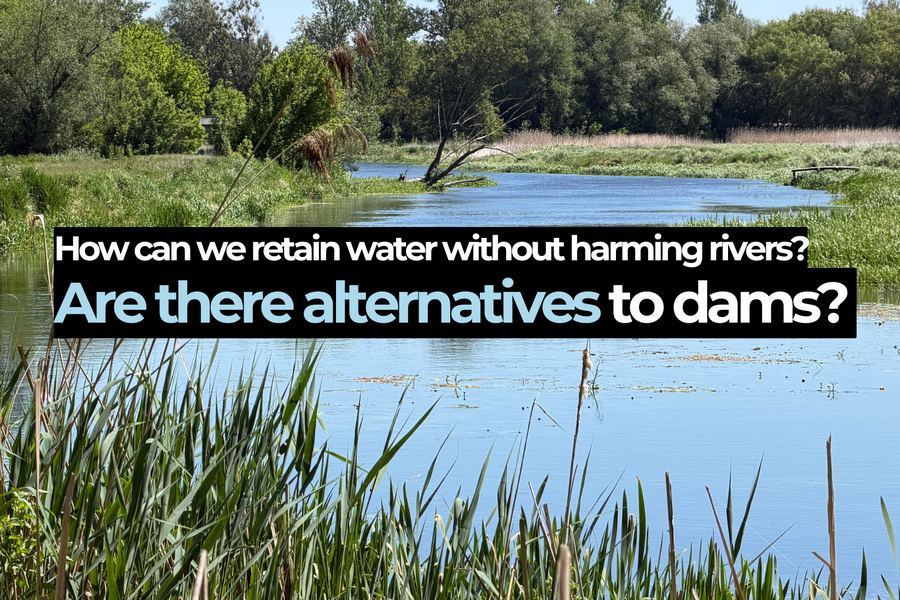
“This was the best-preserved natural section of the river – there were meanders, natural vegetation, fragments with reeds and shrub vegetation. We planned to prepare a justification for this section to be preserved as a nature conservation area. All this was destroyed at the beginning of the year, during the implementation of “flood control measures” – deepening and clearing the riverbed. During the work, many rare species of plants and animals were destroyed, as well as natural vegetation that slowed down the flow, filtered and purified water, and also maintained its level for the surrounding areas.
Huge funds were spent on such flood control measures, but we see that the work was not effective, because it did not save the surrounding areas from flooding. Yes, the precipitation on July 10 was truly extreme. But such phenomena will become more frequent, and we must take this into account and look for more effective solutions,” says Marina Ragulina.
When the riverbed is natural, it has bends, which allows it to slow down the flow and make it less destructive, and natural vegetation on the banks protects against erosion and allows the surrounding areas to effectively absorb and retain water, explains soil scientist Oleg Orlov of the State Committee for the Protection of Natural Resources.
“The floodplain is the part of the floodplain closest to the river. Such areas are overgrown with willows, bushes, and gallery forests, which hold back and filter water. When the river spills into such areas, its speed slows down significantly. If you put a dam here to prevent the river from spilling, it will increase its speed and become more destructive downstream.
The next part of the floodplain is the central floodplain. It not only slows down the flow further – it is a place where rainwater filters into the soil and replenishes groundwater. Therefore, if this part of the floodplain is built up, water in wells in the surrounding areas may disappear.
And the furthest part of the floodplain is the aquifer. It, like a sponge, holds and accumulates water and is a natural filter for water.
Therefore, when the river is leveled, dammed, and the floodplain is built up – all this will have irreversible consequences – both for the river and biodiversity, and for people,” says Oleg Orlov. The floodplain of the river requires maximum expansion and the creation of natural floodplains, which play a critically important function in reducing the impact of flash floods.
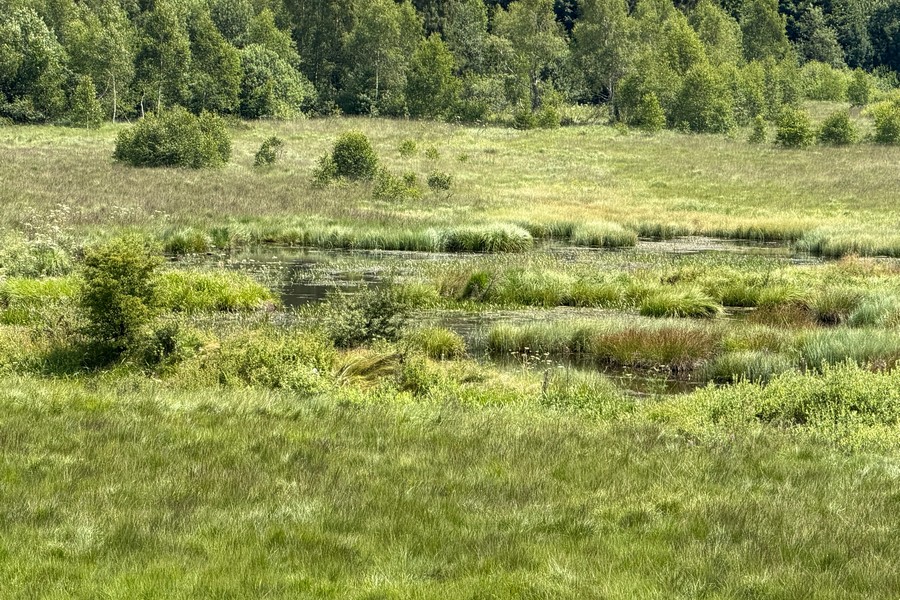
An alternative to the classic Soviet “flood control measures” is the restoration and preservation of natural floodplains of rivers, their meandering, the restoration of swamps, peatlands, wet meadows and other wetlands in order to preserve water resources. This path has been followed for the last 30-40 years in European and North American countries.
That is why our scientists Oleg Orlov and Maryna Ragulina have been surveying water bodies and wetlands in the vicinity of Lviv for the second year in a row, preparing justifications and holding discussions with interested communities in order to give the most valuable of them environmental protection status. them.
In particular, the State Committee for Conservation of Nature has prepared documents for the preservation of eight natural fragments of floodplains of the Lviv region, and has also begun work on the restoration of Bilogorshcha and Northern Peatlands together with partners.
- Where are they located,
- what makes these territories unique
- how critical urban facilities are restored
– we will tell you in our next posts, so subscribe so as not to miss out.
Фото 1: Андрій Котенський, ФБ https://www.facebook.com/andriy.kotenskyy/posts/pfbid027bBATF4bBh2qxUh15bnQmwRbTmSf7MzXEoUBXuBFfuEjHiikaeZ6DJx8SVhM3pSZl
Фото 2, 3, 4: Наталія Федорова